The Explorers Podcast- Apollo 11

Reading response

Content

  • What area of the world/universe is being discussed? What other explorations are mentioned (if any)?
    Space and the moon. Also mentioned were soviet space programs and the previous experiences of Aldrin, Armstrong, and Collins in the Gemini program
  • When did the events happen?
    Through the 1960s
  • What questions do you still have about this expedition after listening to/reading this content?
    The system of choosing military pilots for astronauts makes a lot of sense, and is still normal today. But given the comparatively low-tech planes of the 1960s, the jump from that must have been enormous. How were the astronauts trained for the Apollo program?
  • What parts of the story were most interesting to you?
    The podcast didn’t go into much detail on this, but the technical aspects of the spacecraft, and how they managed to build them. Otherwise, the political aspects of the space race were very interesting.

Form

  • What is the form the content is being presented in?
    Medium length podcast- audio only
  • What aspects of the form are especially interesting or noteworthy?
    The script was written by a listener and not the team. It makes me consider what sort of enthusiast would take the time to research and write such a great script. It also is interesting that it makes the pod-caster essentially just a narrator.
  • What aspects of the form don’t really work?
    The advertisement for the “sunday-school dropouts” broke my immersion in the story. I understand why they would plug other programs, but I think it should be kept to the start or the end of the program.
  • How could this content be made even more interesting or accessible to the general public?
    As it’s audio only, a lot of the things I’d normally like don’t apply (like pictures). That being said, incorporating some of the famous audio clips like Armstrong’s “one small step” quote could have been interesting.

Additional resources

  • Find (at least) one additional scholarly resource that relates to this specific topic or the week’s more general topic. Create a citation and also add the resource to our class Zotero library.
  • Find (at least) one additional primary source that relates to this specific topic of the week’s more general topic. Include an explanation of the source and a link to it. (I’d highly recommend using Tropy to keep track of these primary sources!)
  • https://www.youtube.com/watch?v=iR3oXFFISI0 Broadcast footage of the moon landing from NASA. Neil Armstrong steps out of the lander at around 19:30

Uncharted Worlds by Mark Kaufman and The Deep Sea, by Neal Agarwal

Reading response

Content

  • What area of the world/universe is being discussed? What other explorations are mentioned (if any)?
    The Kaufman Article mentions and compares deep sea explorations to the New Horizons and Apollo missions by NASA, but both works are concerned with deep sea exploration. (Kaufman in the Bahamas)
  • When did the events happen?
    Kaufman’s story is recent, 2019. But Agarwal’s website is a list of facts. Agarwal does mention an exploration in 1960- by Jacques Piccard and Don Walsh
  • What questions do you still have about this expedition after listening to/reading this content?
    It’s a question with an impossible answer, but just how much do we not know about the deep ocean? And given that the ocean is right here with us, why does NASA get so much more funding than oceanic exploration?
  • What parts of the story were most interesting to you?
    The description of the safety standards in Kaufman’s article might be reassuring, but descending into the dark and pressure of the ocean (in many ways the exact opposite of space) seems like the most terrifying experience imaginable.

Form

  • What is the form the content is being presented in?
    Kaufman is a pretty normal article, but with some excellent pictures. Agarwal’s website is a very visually pleasing scrolling image with notes.
  • What aspects of the form are especially interesting or noteworthy?
    Agarwal’s site really demonstrated how deep the ocean really is, the effect of scrolling and seeing things get sparser and sparser really drives the point home. Especially the part about the challenger deep, where the submarine goes down with you as you scroll.
  • What aspects of the form don’t really work?
    I though both did exactly what they were supposed to do very well.
  • How could this content be made even more interesting or accessible to the general public?
    To reiterate the above point, they were both very well written or designed. I honestly can’t suggest any changes that would improve either one.

Additional resources

  • Find (at least) one additional scholarly resource that relates to this specific topic or the week’s more general topic. Create a citation and also add the resource to our class Zotero library.
  • Find (at least) one additional primary source that relates to this specific topic of the week’s more general topic. Include an explanation of the source and a link to it. (I’d highly recommend using Tropy to keep track of these primary sources!)
    https://www.ncbi.nlm.nih.gov/pmc/articles/PMC1559985/
    The first images of a giant squid, mentioned in the Agarwal web page

Cradle of Gold: The Story of Hiram Bingham and Machu Picchu | National Geographic

Reading response

Content

  • What area of the world/universe is being discussed? What other explorations are mentioned (if any)?
    Machu Picchu in Peru, also mentioned are his prior expeditions in south America.
  • When did the events happen?
    In the 1910s, when Bingham took multiple expeditions through south America. And also in more recent years, in regards to the return of artifacts to Peru.
  • What questions do you still have about this expedition after listening to/reading this content?
    What argument does Yale make to keep the artifacts? It feels like only one side was presented here. Why is Hiram Bingham so celebrated as an explorer, when what he really only deserves credit for is spreading the word about the ruins? Additionally, the expedition itself sounded (compared to the others that we have discussed) like a literal walk in the woods.
  • What parts of the story were most interesting to you?

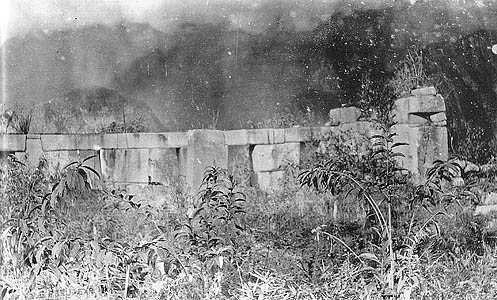
The “treasure of Machu Picchu” was interesting, in particular the knife that was uncovered. What’s really interesting though, is the way in that Machu Picchu was “discovered”. Natives already knew about the ruin, and Bingham was led to the ruin by a five year old child. As we talked about “native knowledge” in class, it’s interesting the way that the native Andeans both found and excavated the site, yet Bingham is credited as the explorer that found it.
Form

  • What is the form the content is being presented in?
    A short lecture by Penn State professor Christopher Heany. Roughly divided up into the history of Bingham and his family, the discovery and excavation of Machu Picchu, and the ongoing debate about artifacts.
  • What aspects of the form are especially interesting or noteworthy?
    The live audience laughed at some of the funnier bits. Comparing it to other podcasts or articles, it is interesting that it was all done in one take, with no edits.
  • What aspects of the form don’t really work?
    The pictures were really illuminating, it kind of made me wonder about whether this would have been better as a pre-recorded lecture, with more pictures and less video of the professor speaking.
  • How could this content be made even more interesting or accessible to the general public?
    The pictures were the best part, combined with his explanations, so perhaps more diagrams, maps, etc. could have been more informative. Especially in such a radical landscape, understanding things like the elevation of the mountains and the route taken to the ruins would have been interesting.

Additional resources

  • Find (at least) one additional scholarly resource that relates to this specific topic or the week’s more general topic. Create a citation and also add the resource to our class Zotero library.
  • Find (at least) one additional primary source that relates to this specific topic of the week’s more general topic. Include an explanation of the source and a link to it. (I’d highly recommend using Tropy to keep track of these primary sources!)
  • https://historycollection.co/21-striking-photographs-machu-picchu-discovery/
    Pictures from Hiram Bingham’s expedition

Who Discovered the North Pole? (Smithsonian) Reading Response

Content

  • What area of the world/universe is being discussed? What other explorations are mentioned (if any)?
    Polar explorations of Peary and Cook. Also Mentioned are prior expeditions of each, And Cook’s mountain climbing
  • When did the events happen?
    1908/1909, events regarding reports of the expeditions afterwards.
  • What questions do you still have about this expedition after listening to/reading this content?
    Though the notes left by each explorer have not been found, will they be one day? This seems like the only way to know for sure who got to the pole first (or at all)
  • What parts of the story were most interesting to you?
    That Peary and Cook were once friends, also the details about the food (pemmican is indeed very greasy, also delicious) Also, though I’m writing this response about the Smithsonian article, Admiral Byrd’s note about storing food at the south pole is really fascinating (I guess before home freezers.)

Form

  • What is the form the content is being presented in?
    A side by side narrative (text article)
  • What aspects of the form are especially interesting or noteworthy?
    Nothing particularly noteworthy, but very functional.
  • What aspects of the form don’t really work?
    The way in which Cook and Peary fought for recognition was a little bit muddled.
  • How could this content be made even more interesting or accessible to the general public?
    Nothing really, though in the spirit of this class, I do think that this would translate very well to a podcast.

Additional resources

  • Find (at least) one additional scholarly resource that relates to this specific topic or the week’s more general topic. Create a citation and also add the resource to our class Zotero library.
  • Find (at least) one additional primary source that relates to this specific topic of the week’s more general topic. Include an explanation of the source and a link to it. (I’d highly recommend using Tropy to keep track of these primary sources!)
  • https://babel.hathitrust.org/cgi/pt?id=nyp.33433000670632&view=1up&seq=11

    Cook’s Book about his journey.

The Scientific Legacy of the U.S. Exploring Expedition, Nathaniel Philbrick

Content

  • What area of the world/universe is being discussed? What other explorations are mentioned (if any)?
    The south Pacific, Cape Horn, The Pacific northwest. Mentioned is captain Cook
  • When did the events happen?
    1830s-40s
  • What questions do you still have about this expedition after listening to/reading this content?
    The article explains the impact of the expedition, but not the issues it may have encountered (at least in detail). Also an explanation of the routes taken and the order in which places were visited would be interesting.
  • What parts of the story were most interesting to you?
    Describing the team members such as Titian Peale and James Dana
    Also the part about the interest and expense, that “Not even the race to the moon in the 1960s generated a financial commitment to science that rivaled the decades after the U.S. Ex. Ex.”

Form

  • What is the form the content is being presented in?
    Medium length article, separated with headers
  • What aspects of the form are especially interesting or noteworthy?
    It’s a fairly ordinary way of explaining something, but each header helps grab your attention again.
  • What aspects of the form don’t really work?
    I think the form worked perfectly for the content presented
  • How could this content be made even more interesting or accessible to the general public?
    Some graphics of the collection or illustrations of the voyage could be interesting. Perhaps even a visual timeline of the expedition.

Additional resources

  • Find (at least) one additional scholarly resource that relates to this specific topic or the week’s more general topic. Create a citation and also add the resource to our class Zotero library. Jamison, Thomas. “Geospatial Intelligence and the U.S. Exploring Expedition (1838-1842): Reframing the History of U.S. Naval Intelligence.” Intelligence & National Security 33, no. 5 (August 2018): 705–15. doi:10.1080/02684527.2018.1442995.
  • Find (at least) one additional primary source that relates to this specific topic of the week’s more general topic. Include an explanation of the source and a link to it. (I’d highly recommend using Tropy to keep track of these primary sources!)

“Synopsis of the report on zoophytes of the U.S. exploring expedition around the world, under C. Wilkes, U.S.N. commander, in the years 1838-1842”

James Dwight Dana and United States Exploring Expedition

Introduce Yourself (Example Post)

This is an example post, originally published as part of Blogging University. Enroll in one of our ten programs, and start your blog right.

You’re going to publish a post today. Don’t worry about how your blog looks. Don’t worry if you haven’t given it a name yet, or you’re feeling overwhelmed. Just click the “New Post” button, and tell us why you’re here.

Why do this?

  • Because it gives new readers context. What are you about? Why should they read your blog?
  • Because it will help you focus you own ideas about your blog and what you’d like to do with it.

The post can be short or long, a personal intro to your life or a bloggy mission statement, a manifesto for the future or a simple outline of your the types of things you hope to publish.

To help you get started, here are a few questions:

  • Why are you blogging publicly, rather than keeping a personal journal?
  • What topics do you think you’ll write about?
  • Who would you love to connect with via your blog?
  • If you blog successfully throughout the next year, what would you hope to have accomplished?

You’re not locked into any of this; one of the wonderful things about blogs is how they constantly evolve as we learn, grow, and interact with one another — but it’s good to know where and why you started, and articulating your goals may just give you a few other post ideas.

Can’t think how to get started? Just write the first thing that pops into your head. Anne Lamott, author of a book on writing we love, says that you need to give yourself permission to write a “crappy first draft”. Anne makes a great point — just start writing, and worry about editing it later.

When you’re ready to publish, give your post three to five tags that describe your blog’s focus — writing, photography, fiction, parenting, food, cars, movies, sports, whatever. These tags will help others who care about your topics find you in the Reader. Make sure one of the tags is “zerotohero,” so other new bloggers can find you, too.

Design a site like this with WordPress.com
Get started